A well-fitted bra is an investment. Whether you paid £20 or £80, the elastic, underwire, fabric and straps will all degrade significantly faster if washed incorrectly. The good news is that the right care routine is simple — it just requires breaking a few deeply ingrained habits.
This guide covers how often to wash, how to wash by hand and by machine, how to dry, how to store, and when it's time to replace.
How Often Should You Wash a Bra?
The general guidance is every 2–3 wears for everyday bras. This might feel more frequent than expected, but bra fabric absorbs sweat, body oils, and deodorant with each wear — all of which degrade the elastic over time if left to build up.
Sports bras are the exception: wash after every single wear. Sweat contains acids that actively break down elastic, and a sports bra worn for an hour in a workout accumulates far more than an everyday bra worn for the same time. Washing after each use significantly extends the life of your sports bras.
Rotation matters as much as washing frequency. Wearing the same bra two days in a row doesn't allow the elastic to recover between wears. Ideally rotate between at least 3–4 bras, giving each one a rest day after each wear.
The Two Washing Methods
Hand washing — the best method for any bra
- Fill a basin or sink with cool or lukewarm water (never hot — heat degrades elastic).
- Add a small amount of gentle detergent or dedicated lingerie wash. A teaspoon is usually enough for 2–3 bras.
- Submerge the bras and gently squeeze the soapy water through the fabric. Focus on the band, cups and underarm areas where oils accumulate most.
- Leave to soak for 15–30 minutes if there's built-up deodorant residue, otherwise a few minutes of gentle agitation is sufficient.
- Rinse thoroughly in clean cool water until no suds remain. Press gently — don't wring.
- Reshape the cups while the bra is still wet, then lay flat or hang to dry.
Machine washing — how to do it without damage
- Always fasten all hooks before washing — unhooked bras tangle and distort in the drum.
- Place each bra in a dedicated lingerie bag (mesh wash bag). This protects underwires from bending and straps from tangling around other items.
- Use the delicates cycle — low spin speed, cool water (30°C maximum).
- Use a gentle detergent. Avoid fabric softener: it coats elastic fibres and reduces their elasticity over time.
- Remove immediately when the cycle finishes. Bras left damp in a machine drum can develop odour and lose their shape.
- Never spin at high speed — if your machine allows, choose the lowest spin setting available.
Do's and Don'ts
- Wash in cool or lukewarm water
- Fasten hooks before washing
- Use a lingerie bag for machine washing
- Rotate between multiple bras
- Reshape cups while damp
- Air dry flat or hanging from the centre gore
- Use gentle or lingerie-specific detergent
- Wash sports bras after every wear
- Tumble dry — ever
- Use hot water
- Use fabric softener
- Wring or twist to remove water
- Hang from the straps to dry (stretches them)
- Wash with rough fabrics like denim
- Leave damp in the machine
- Iron a bra
How to Dry Your Bras
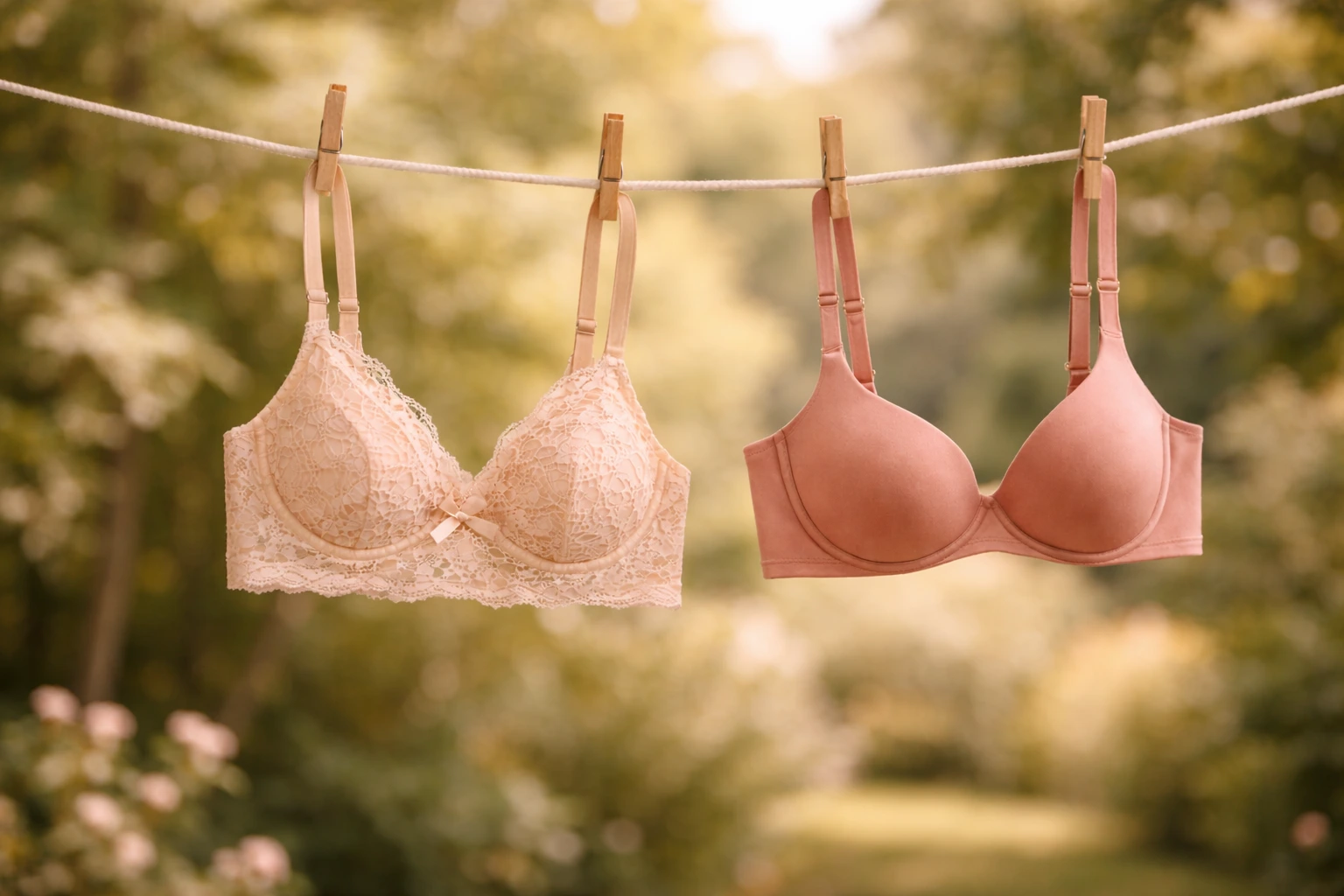
After washing, gently press (don't wring) excess water out by pressing the bra between two towels. Then lay flat on a clean towel or hang from the centre gore — the small piece of fabric or hardware between the cups. Never hang from the straps; the weight of a wet bra stretches them permanently.
Dry away from direct sunlight or direct heat. UV exposure fades fabric and direct heat from radiators does the same damage as a tumble dryer — it breaks down elastic fibres. A warm room with good air circulation is ideal.
Storing Your Bras Correctly
How you store bras matters more than most people think, particularly for moulded cup styles. Stacking cups inside each other (the way they come folded in packaging) crushes the moulded shape over time and causes the cups to lose their structure. Instead, store moulded bras by lining them up in a drawer with one cup nested inside the other's cup space — not flattened down.
For lace or soft-cup bras, folding in half with one cup tucked inside the other is fine. Keep bras in a drawer rather than a pile — they should be visible so you can rotate through them rather than reaching for the same two or three.
When to Replace a Bra
Even with excellent care, bras have a natural lifespan. The main signals that it's time to replace are: the band feels loose even on the tightest hook, the underwire is starting to poke through the fabric, the cups have lost their shape and don't regain it after washing, or the straps have stretched to the point where they're fully tightened and still not providing enough support.
For regularly worn everyday bras with good care, this typically happens at 6–12 months. Sports bras worn frequently may need replacing sooner — every 6 months with heavy use.
When it's time for new bras, make sure your size is still accurate — bodies change, and so does the fit.
Check My Current Size →