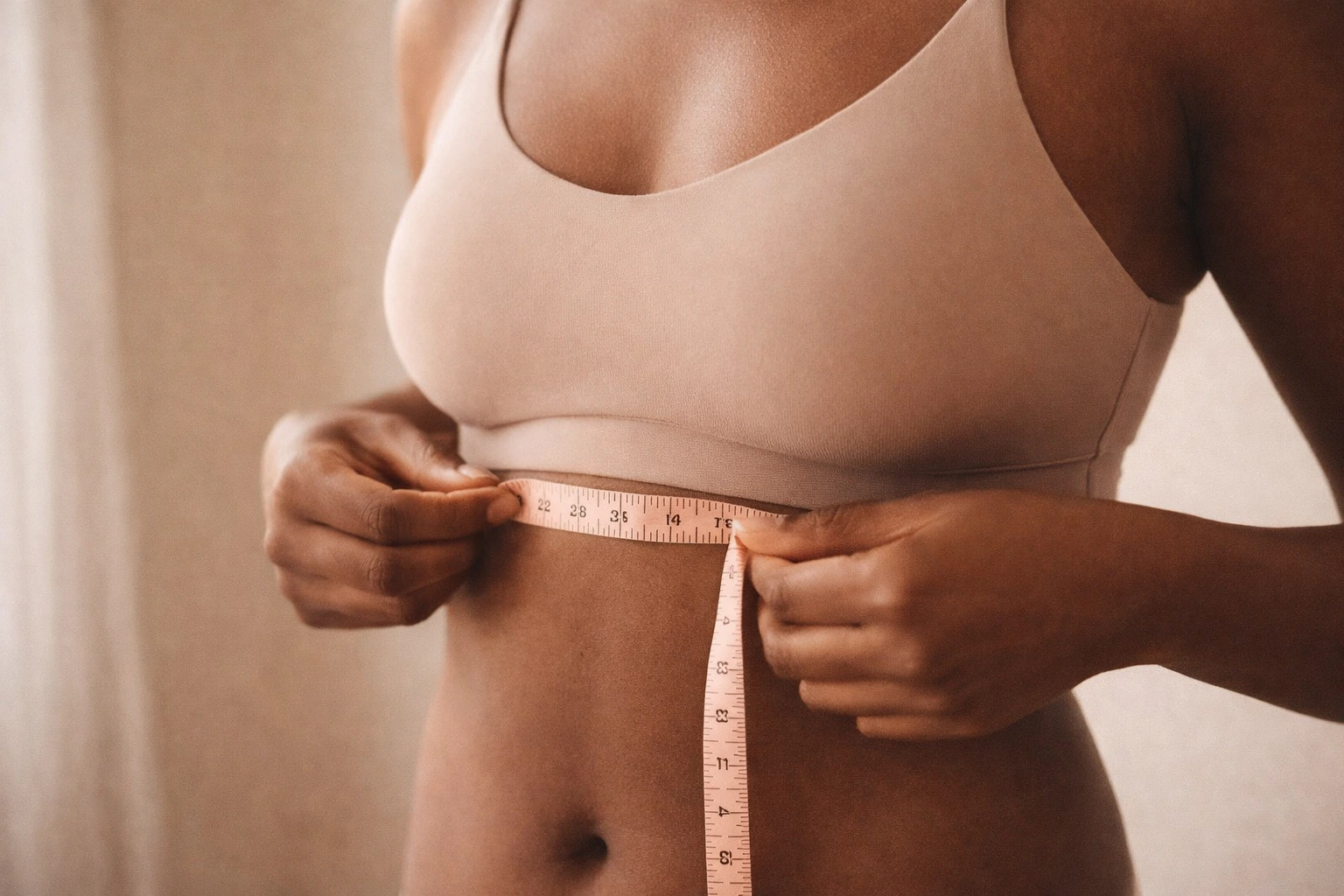
You bought a bra that fit perfectly six months ago. Now it digs in, gaps at the cup, or the band rides up constantly. You haven't done anything differently — so why doesn't it fit anymore?
The honest answer: bra size is far less fixed than most people think. Your body changes constantly, and so does your size. In fact, most women will go through several size changes in their lifetime without ever experiencing a pregnancy. Understanding why this happens — and when — is the first step to always having a bra that actually fits.
The 8 Most Common Reasons Your Bra Size Changes
Weight fluctuation
Breast tissue is largely made up of fat, so it responds to weight changes more quickly than most other areas of the body. Even a gain or loss of 2–3 kg can shift your band size by one increment and your cup by one or two letters. If you've recently changed weight, remeasure before buying anything new.
Hormonal fluctuations
Estrogen and progesterone directly affect breast tissue. Many women notice their bras feel tighter or looser at different points in their menstrual cycle — particularly in the week before their period, when the body retains more fluid. This isn't imaginary: breast volume can change by up to 20% across a cycle. The same fluctuation happens during perimenopause and menopause as hormone levels shift more dramatically.
Pregnancy and breastfeeding
Breast size typically increases by 1–2 cup sizes during pregnancy and can increase further when milk comes in. Size usually stabilises 3–6 months after weaning — but it may not return to your pre-pregnancy size or shape. It's normal to be a different size after having children than you were before.
Age and changes in breast tissue
As we age, breast tissue gradually changes composition — the ratio of glandular tissue to fatty tissue shifts, and skin loses some elasticity. This can change both breast shape and the way existing bras fit, even without any change in weight. Women in their 30s and 40s often find they need a different style of bra even if their measured size stays the same.
Exercise and muscle development
Strengthening your chest, back and shoulder muscles through exercise can change your rib cage circumference and posture. A broader back from strength training can increase your band size, while changes in chest muscle mass can affect how a cup sits. Conversely, significant cardio-focused weight loss often reduces breast volume faster than other body fat.
Medication and medical conditions
Several common medications cause breast tissue changes. Hormonal contraceptives (particularly pills containing estrogen), hormone replacement therapy, certain antidepressants and some blood pressure medications can all cause breast size to increase. Thyroid conditions can also affect breast tissue. If your size has changed and you've recently started or stopped a medication, that's likely a factor.
The bra itself wearing out
This one is easy to overlook: the bra hasn't changed, but the bra has. Elastic loses its recovery over time. The average bra has a useful life of 6–12 months of regular wear. A band that was once snug on the loosest hook will eventually feel loose on the tightest one — this isn't your body changing, it's the bra wearing out. If your current bra is over a year old, replace it before concluding your size has changed.
You were never quite the right size to begin with
Studies consistently suggest that around 80% of women are wearing the wrong bra size — usually a band that's too large and a cup that's too small. If a new bra feels different from an old one you thought fit, it's worth considering whether the old one was actually fitting well, or just feeling familiar.
When Should You Remeasure?
As a baseline, remeasure every 6–12 months even if nothing obvious has changed. But also remeasure any time:
- Your current bras start feeling tight in the cup or loose in the band
- You gain or lose more than about 3–4 kg
- You start or stop hormonal contraception
- You're pregnant or have recently stopped breastfeeding
- You've significantly changed your exercise routine
- Your current bras are more than a year old and feel loose
Not sure what size you are right now? Our calculator takes your current measurements and gives you your size across every international system.
Measure My Size Now →How to Get an Accurate Measurement
When you do remeasure, a few things make a big difference to accuracy:
Measure at a consistent point in your cycle. Since breast volume can fluctuate across your cycle, measuring on the same day each time (for example, the week after your period ends, when volume tends to be at its most stable) will give you more consistent readings to compare.
Wear a non-padded bra or no bra at all. Padded cups add volume and will inflate your bust measurement. A t-shirt bra or unlined underwire is fine; a heavily padded push-up is not.
Use a soft tape measure, not a rigid one. Kitchen or craft tape measures don't follow your body's curves accurately. A dressmaker's tape gives a much more reliable result.
Measure twice. Take both your underbust and bust measurements twice and average them if there's a small difference. Holding the tape slightly different each time is surprisingly common.
What If You're Between Sizes?
Bra sizing isn't infinitely precise — the system rounds measurements to the nearest inch or centimetre, which means some women genuinely fall between two sizes. If you calculate a size and it doesn't feel quite right, sister sizing is your best tool. Sister sizes share the same cup volume but pair it with a different band — so 34C, 36B and 32D all contain the same amount of breast tissue, just on different band widths.
If the band feels right but the cup gaps slightly, try going up one cup letter. If the cup fits but the band is too tight, go up one band size and down one cup letter. Our sister size chart shows all the options laid out clearly.
The Takeaway
Your bra size changing isn't a problem to solve — it's a normal part of having a body. The only real mistake is ignoring it and continuing to wear bras that no longer fit. An ill-fitting bra is uncomfortable at best and causes pain and posture problems at worst.
The fix is simple: remeasure regularly, replace bras when they wear out, and treat your size as a flexible number rather than a fixed identity. Once you do, finding bras that actually fit stops being a frustrating mystery.